All official European Union website addresses are in the europa.eu domain.
See all EU institutions and bodies
An official website of the European Union | How do you know?
Environmental information systems
Translating ecosystem services into socio-economic value can help make the benefits of Marine Protected Areas visible and strengthen support for marine conservation.
In the Vlaamse Banken Marine Protected Area in Belgium, the Blue4All project explored how ecosystem service valuation can support decision-making and communication around marine protection. Using a benefit transfer method combined with semi-structured stakeholder interviews, the case study assessed how marine ecosystems generate benefits for society, such as biodiversity conservation and recreation. The approach helped link ecological processes to socio-economic values, making the benefits of marine protection more tangible for stakeholders and policymakers. By combining scientific valuation methods with stakeholder insights, the experience demonstrates how ecosystem service assessments can support more informed management and improve stakeholder understanding and acceptance of Marine Protected Areas.
Objectives of the conservation measures
The Vlaamse Banken Marine Protected Area is located in the Belgian part of the North Sea, an area characterised by intense spatial use, including fisheries, shipping and offshore energy production. These competing uses can create conflicts between conservation objectives and economic activities. Although the area hosts ecologically important habitats such as historical oyster reefs, stakeholder awareness of conservation measures has remained limited, increasing the risk that the MPA functions primarily as a “paper park”. Within this context, the Blue4All Living Lab aimed to explore how ecosystem service valuation could help improve the understanding and communication of the benefits generated by marine ecosystems. In particular, the case study focused on the potential restoration of European flat oyster reefs, which historically played an important ecological role in the region. These reefs act as ecosystem engineers by creating complex habitats that support biodiversity and fish populations while contributing to ecosystem functions such as nutrient cycling and water quality regulation. However, during the baseline assessment it became clear that local stakeholders were sceptical about proposed restoration measures, such as oyster reef restoration, because they were unsure whether these actions would provide tangible benefits for fisheries and local livelihoods. The objective of the case study was therefore to identify and estimate the ecosystem services associated with oyster reef restoration and to explore how these benefits could be communicated in socio-economic terms. By translating ecological functions into socio-economic value, ecosystem service valuation can help bridge the gap between ecological conservation goals and societal interests. This approach contributes to the objectives of the EU Mission “Restore our Ocean and Waters by 2030”, which emphasises the need to protect marine ecosystems while demonstrating their broader benefits for society and the economy.
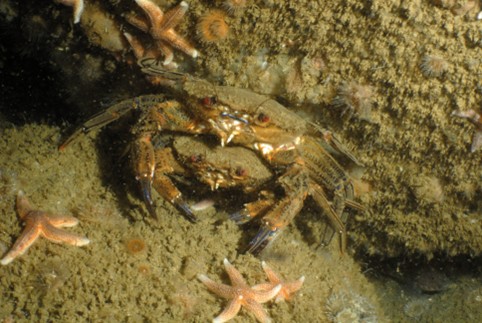
© Alain Norro (RBINS). Epibenthic fauna in the Vlaamse Banken Marine Protected Area.
Period covered: 2025
Country: Belgium
Location: Vlaamse Banken Marine Protected Area (Belgium)
Governance level: Local, National
Project acronym: Blue4All
Project website: https://blue4all.eu/
Solutions
The Vlaamse Banken Living Lab explored how ecosystem service valuation can support decision-making and communication around marine restoration. The exercise focused on the potential restoration of European flat oyster reefs (Ostrea edulis), historically present in the Belgian part of the North Sea and known to provide multiple ecological and socio-economic benefits. To better understand these benefits, the project combined expert knowledge with ecosystem service valuation methods.
Blue4All in Vlaamse Banken MPA - A Stakeholder-Driven Approach
More about Solutions
Lessons learned
- Diverse expertise is essential. Involving experts from different backgrounds in semi-structured interviews helps capture the topic from multiple perspectives and improves the identification of relevant ecosystem services. Diversity of expertise proved more valuable than conducting a large number of interviews, as additional interviews often lead to diminishing new insights.
- Combining qualitative and quantitative methods strengthens the analysis. Qualitative interviews help identify locally relevant ecosystem services and provide context that supports the interpretation of quantitative valuation results.
- Benefit transfer methods are a practical entry point for ecosystem service valuation. When sufficient comparable studies exist, the method can provide useful economic estimates without requiring resource-intensive primary valuation studies.
- Site-specific data remains critical for credible results. Limited availability of comparable valuation studies for offshore oyster reefs meant that the results should be interpreted as indicative rather than definitive, highlighting the need for improved ecological and socio-economic data.
- Adequate time and resources are needed for the process. Ecosystem service valuation combines research, stakeholder engagement, and data analysis. Allowing sufficient time for preparation, data collection, analysis, and feedback is essential to ensure meaningful results.
References
- Dvorski K. & Krvaric A. et al. (2025) - Tool Validation Report. Deliverable - D4.4 under the WP4 of the BLUE4ALL project (GA n° 101094014).
- Drews-von Ruckteschell F. et al (2025) – Tool Testing in Action – A closer look at our MPA Sites Across Europe. Factsheets – under the BLUE4ALL project (GA n° 101094014).
- BLUE4ALL. Experiences from MPA governance and management in action. Case Study Reports - under the BLUE4ALL project (GA n° 101094014).
- Van Oijstaeijen W. et al. (2025). Identification and Valuation of Benefits from Marine Ecosystem Services. Deliverable – D2.3 under the WP2 of the BLUE4ALL project (GA n° 101094014).
Source: https://blue4all.eu/publications (to be published after review)