All official European Union website addresses are in the europa.eu domain.
See all EU institutions and bodies
An official website of the European Union | How do you know?
Environmental information systems
The EU Blue Parks initiative is a collaborative effort launched under the EU Mission Ocean and Waters, to accelerate marine conservation. It focuses on science-based solutions for setting, managing and expanding marine protected areas (MPAs) across European sea basins, including nationally and internationally designated marine protected areas, Natura 2000 marine and coastal sites and other designated marine conservation zones.
This initiative is a key contribution of the Mission to meet two of its targets linked to the EU Biodiversity Strategy for 2030:
- Protect at least 30% of the EU’s seas and integrate ecological corridors, as part of a true Trans-European Nature Network;
- Strictly protect at least 10% of the EU’s seas.
The EU Blue Parks initiative includes 3 main key elements:
EU-funded projects
Research and Innovation (R&I) activities are funded through dedicated calls for proposals in the different Horizon Europe Work Programmes. These R&I activities are focused on MPA designation, expansion, restoration, and socio-economic transitions, with an emphasis on developing and deploying innovative solutions tailored to different regions.
Community building
the EU Blue Parks Community established under this initiative unites national agencies involved in marine and environmental matters, regional authorities for marine protected areas and Natura 2000 sites, researchers, NGOs, European marine networks, stakeholders, donors and sustainable investors, as well as relevant collaborative projects. This platform enables knowledge exchanges, governance developments, opportunities for cooperation and sharing of good practices for MPA management.
Support services
and communication
Activities include annual or biannual dedicated EU Blue Parks workshops, information sharing through news pieces in newsletters, and a helpdesk for technical advice on marine protection issues.
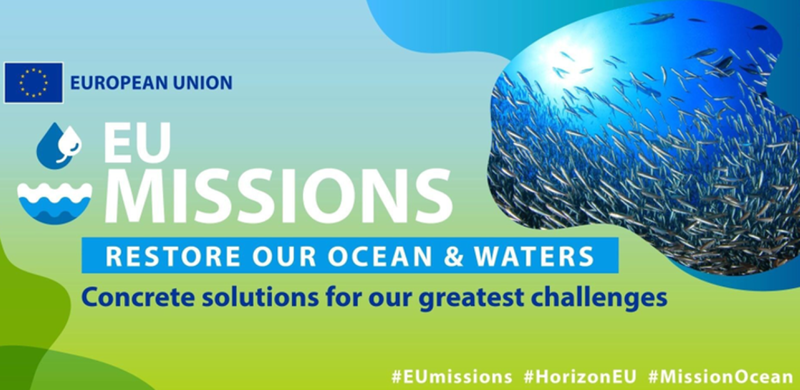
"The EU Mission “Restore our Ocean and Waters by 2030” aims to protect and restore the health of our ocean and waters through research and innovation, citizen engagement and blue investments. EU Blue Parks is one of the many initiatives funded and managed by the Mission."
Marine Protected Areas in Europe
MPAs are areas designed for conserving coastal and marine ecosystems with the goal of maintaining biodiversity and ensuring that ecosystems and their services are fully functional. The European Environmental Agency (EEA) has highlighted the importance of expanding the European network of MPAs and designating new marine strictly protected areas (see definition in info box below) while strengthening their management and connectivity.
“Strictly projected areas are fully and legally protected areas designated to conserve and/or restore the integrity of biodiversity-rich natural areas with their underlying ecological structure and supporting natural environmental processes. Natural processes are therefore left essentially undisturbed from human pressures and threats to the area’s overall ecological structure and functioning.“
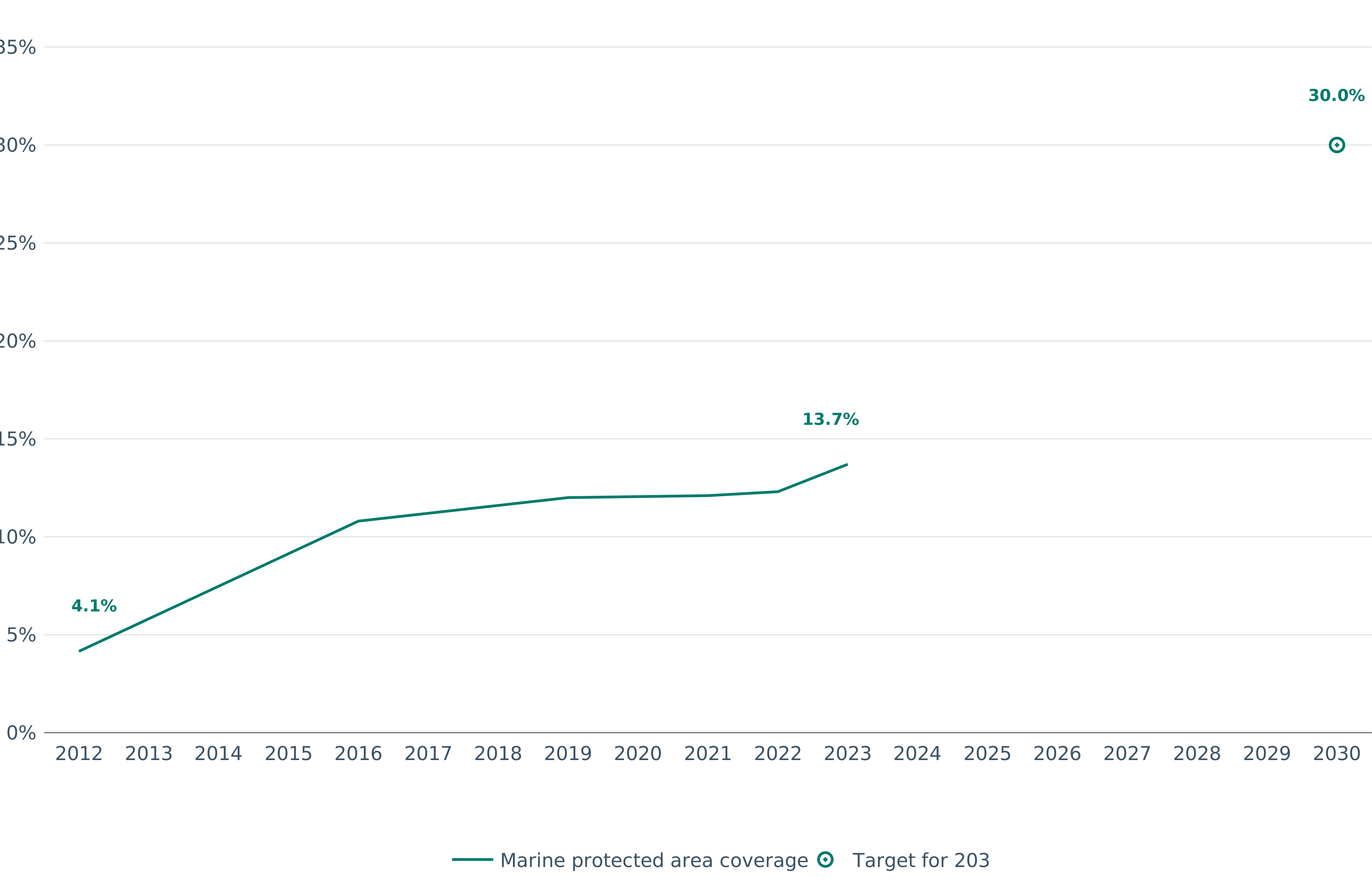
Over the past decades, the total marine area covered by MPAs in the EU has increased gradually, reaching 12.3% in 2022 (Figure 1). This is the result of the expansion of the Natura 2000 network (a network of protected areas designated under the EU Birds and Habitats Directive), protected areas established through complementary national designations, notably to reach Good Environmental Status under the Marine Strategy Framework Directive, and Regional Seas Conventions, namely the Barcelona Convention, HELCOM & OSPAR. Although this trend is positive, further expansion will be needed to reach the policy target of legally protecting at least 30% of EU’s seas by 2030 set by the EU Biodiversity Strategy for 2030.
In addition, following the EU Biodiversity strategy policy, 10% of MPAs shall reach strictly protected status by 2030. The estimated extension of strictly protected marine areas is less than 1% (Healthy seas, thriving fisheries: transitioning to an environmentally sustainable sector, EEA), thought this number is uncertain since dataflow and assessment methodologies are still under development. A data update is expected to be reported to the EEA on a voluntary basis throughout 2026, with a related publication expected shortly after that.
The Nature Restoration Regulation came into effect in 2024 stablishing overarching binding restoration targets for specific marine habitats and species until 2050. MPAs are an important tool in the realization of these targets.
Status and target of marine protected area coverage
(Source: Marine protected areas in Europe's seas | Indicators | European Environment Agency (EEA))
Furthermore, the EU Biodiversity Strategy for 2030, the Marine Strategy Framework Directive, and the Nature Restoration Regulation call for building a truly coherent Trans-European network of protected areas through improving their connectivity. It is therefore important to ensure ecological representativity, coherence and connectivity of existing and newly designated marine protected areas. Additionally, improving management effectiveness and quantifying the impact of individual marine protected areas and of their network should become a major focus in the coming years.
The following chapters will explore activities conducted under Mission Ocean and Waters and their potential impact in supporting the European network of MPAs.
EU Blue Parks projects towards reaching MPAs targets
Mission Ocean and Waters has a portfolio of a total of 81 running projects between 2021 and 2025. Among those, 6 projects are funded under the EU Blue Park initiative and other 18 are working towards achieving the objective of protecting and restoring marine and freshwater ecosystems and biodiversity (Objective 1 of the Mission Ocean and Waters). These projects are developing and testing a broad range of innovative solutions to support restoration and protection of marine and freshwater ecosystems. These include restoration of free-flowing rivers, wetlands, and floodplains as well as tools to support the effectiveness of MPAs and nature-based solutions for restoration of vulnerable marine ecosystems.
Among Mission’s projects working towards Objective 1, six projects are dedicated to supporting science-based solutions for setting, managing and expanding MPAs, as part of the Blue Parks initiative. The infographics below show an overview of the projects funded by Mission Ocean and Waters under Objective 1 and, highlighted, the six Blue Parks projects dedicated to supporting science-based solutions for setting, managing and expanding MPAs. Additional information on each project can be accessed by clicking on its name.
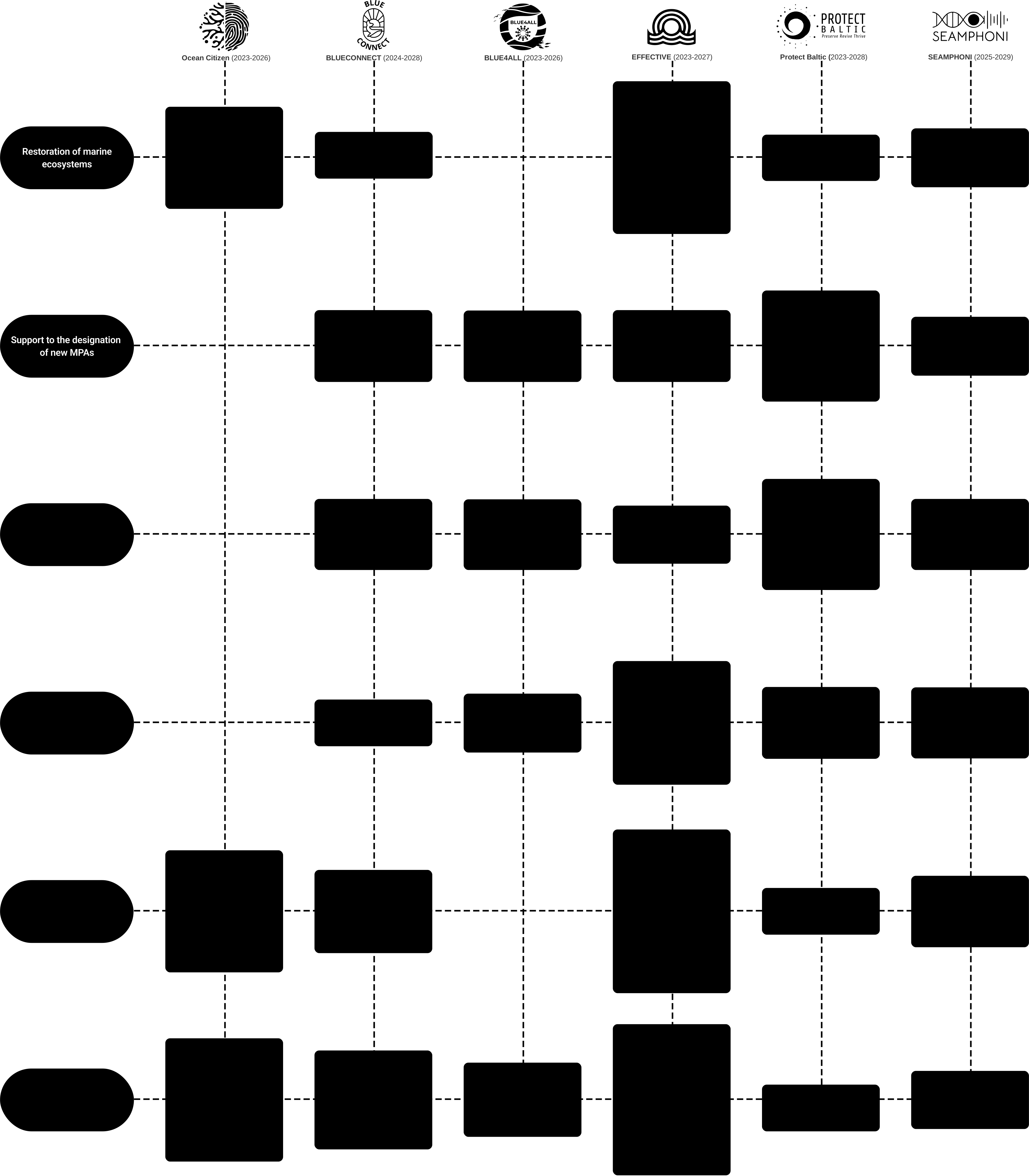
To illustrate the activities of the six Blue Parks projects, the infographic below provides an overview of selected outputs and tools being developed by each project. Activities are organized under six thematic groups:
- Restoration of marine ecosystems;
- Support to the designation of new MPAs and/or to change their status to strict protection;
- Improve management and governance of existing MPAs;
- Strengthen ecological corridors and connectivity across MPAs towards a true Trans-European Nature Network;
- Monitor and track progress of the effectiveness of restoration and protection activities;
- Stakeholders’ engagement and financial models for sustainable restoration and protection activities.
Overview of activities planned by Mission’s projects started between 2021 and 2024
These solutions are being developed and tested at several demonstration sites and living labs across the EU regional sea basins. The map below shows the location of demonstration sites and living labs under the six projects belonging to the Blue Parks initiative. The background map displays the location and extension of existing MPAs in Europe. Additional information on the sites and project conducting activities can be accessed when clicking on the site.
Location of demo sites and living labs for Blue Parks initiative and location of current MPAs in Europe
The map is interactive, and additional information on a demo site and living labs is displayed when clicking on it.
Blue Parks projects use cases: solutions and lessons learned
Below we showcase some successful examples of good practices, tools or solutions being developed by the Blue Park projects. These use cases serve to illustrate some concrete examples which can be replicated in other areas.